India has never run a national survey, so erectile dysfunction statistics in India come from individual studies. They range from about 5% of men in a rural North Indian community to roughly half of men seen in hospital clinics, and about 6 in 10 men with type 2 diabetes. ED is common, and it is treatable.
This guide gathers the Indian research in one place, explains why the numbers disagree, clears up the viral figures you may have seen on social media, and tells you what to do if you are one of the men in these numbers. If you want the medical side in depth, read our full guide on what causes erection problems and how they are treated.
How common is erectile dysfunction in India?
Common enough that no man should feel alone with it. How common depends on who is asked: healthy men in a village report it far less often than men already visiting a hospital, and men with diabetes report it most of all.
Erectile dysfunction (ED) means you regularly cannot get or keep an erection firm enough for sex. It used to be called impotence, and in Hindi you may hear words like namardi or gupt rog (a broad term for "hidden" sexual health problems). Doctors do not call it ED after one bad night. It is the pattern that matters.
Indian ED studies at a glance
These are the most useful Indian figures we could verify, with the group each one describes. Read the second column carefully, because it changes everything.
| Setting | Who was studied | How many had ED | Source |
|---|---|---|---|
| Rural Haryana, community survey | 894 men aged 18 to 60 | 5.0% | Singh et al., 2018 (AIIMS) |
| Same survey, split by age | Men 18 to 30 vs men over 30 | 1.9% vs 7.6% | Singh et al., 2018 |
| South Indian hospital study | Men attending a hospital | 48% | As cited in Singh et al., 2018 |
| Jaipur teaching hospital | 357 men with type 2 diabetes | 59.4% | Parmar et al., J Family Med Prim Care, 2022 |
| India, 10 studies pooled | Men with type 2 diabetes | 60.6% | Rana et al., 2025 (meta-analysis) |
| Indian de-addiction studies | Men dependent on alcohol | 22% to 76% (any sexual problem) | Sarkar et al., 2021 (AIIMS) |
| Indian de-addiction studies | Men dependent on opioids | 40% to 90% (any sexual problem) | Sarkar et al., 2021 |
Why the numbers differ so much
Three things explain most of the gap:
- Who is asked. A village survey asks every adult man, most of whom are healthy. A hospital study asks men who are already unwell or who came in because of a sexual problem. The second group will always show a much higher rate.
- How they are asked. Some studies use a validated questionnaire such as the International Index of Erectile Function (IIEF), which picks up milder ED. Others simply ask "do you have a problem?", and many men say no out of shame. A major global review found that the choice of questionnaire is one of the biggest reasons ED rates vary, from 3% to 76.5% across countries (Kessler et al., BJU International, 2019).
- Who is willing to say it. In a face-to-face village interview, admitting to erection trouble is hard. The true rural figure is very likely higher than what men report.
So the honest answer is a range, not one number. What every study agrees on is that ED is common, it rises with age and illness, and most men who have it never tell a doctor.
Does erectile dysfunction increase with age in India?
Yes. ED becomes more common with each decade of life, but young men are not immune. In the rural Haryana study, about 2% of men aged 18 to 30 reported ED, against nearly 8% of men over 30.
Age on its own is not the whole story. With age come the conditions that damage blood vessels and nerves: diabetes, high blood pressure, high cholesterol and weight gain. In the Jaipur study of diabetic men, age was the strongest single predictor of how well a man's erections worked. You can read more about how erections change with age in our separate guide.
ED in your 20s and 30s
Younger men who come to us are often surprised to learn how normal their problem is. In a Mumbai andrology clinic that reviewed 606 men treated for ED, 41% were aged 30 to 39, the largest single age group (Mutha et al., J Clin Diagn Res, 2015). In younger men the usual drivers are:
- stress, work pressure and performance anxiety, especially early in a marriage
- poor sleep and long screen hours
- smoking, gutkha and heavy drinking
- early diabetes or pre-diabetes that has not been picked up yet
- low testosterone or thyroid problems, which are less common but worth checking
The good news is that most of these causes respond well once they are identified.
ED after 40 and 50
After 40, physical causes take the lead. The blood vessels that supply the penis are narrow, so they often show damage from sugar, BP or cholesterol before the heart does. That is why a doctor will usually check your sugar, blood pressure and lipids when you mention erection trouble after 40. It is not a lecture; it is often the most useful health check you will get that year.
Which health problems push ED rates highest?
The highest ED rates in India are seen in men with diabetes, high blood pressure and heart disease, and in men who use alcohol, tobacco or opioids heavily. ED is often an early sign of one of these, which is why a good doctor looks for the cause, not just a pill.
This is the view we take at Raaz: the same erection problem can have very different root causes. Two men with identical symptoms may need completely different treatment.
Diabetes: about 6 in 10 diabetic men
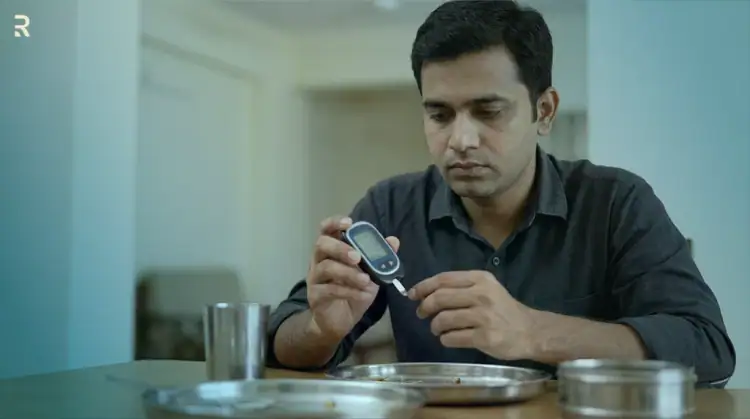
India has one of the largest numbers of people with diabetes in the world, and that shows up in the bedroom. A 2025 meta-analysis of 10 Indian studies put ED at about 60% of men with type 2 diabetes, and noted that diabetic men have three to four times the risk of men without diabetes (Rana et al., 2025). In the Jaipur study, the men most affected were older, had lived with diabetes longer, had higher blood pressure and fasting sugar, and had lower free testosterone. The authors concluded that better sugar and BP control could reduce sexual problems. Learn more about how diabetes affects erections.
Blood pressure and heart health
In the rural Haryana study, men with hypertension were about three times more likely to report a sexual health problem, and men with diabetes about twice as likely. The global review by Kessler and colleagues found that men with ED are more likely to have heart and blood vessel disease. Put simply, an erection is a blood-flow event. If your erections have become weaker, it is worth checking your heart health too. Some BP medicines can also affect erections, so never stop one on your own; ask your doctor about alternatives. Our guide to high blood pressure and erectile dysfunction explains this in detail.
Alcohol, tobacco, gutkha and other substances
Indian research is clear on this. A systematic review from AIIMS, New Delhi found sexual problems in 22% to 76% of men dependent on alcohol and 40% to 90% of men dependent on opioids (Sarkar et al., Indian Journal of Psychiatry, 2021). In the rural study, smoking and cannabis use were both linked to more sexual health problems, and in the Mumbai clinic, 64% of men treated for ED had an addiction of some kind.
Nicotine, whether smoked or chewed as gutkha or khaini, narrows blood vessels and damages their lining over time. Alcohol may lower inhibitions in the moment but dulls nerves and hormones with regular heavy use. Read more on alcohol and erectile dysfunction and on how chewing tobacco affects erections.
Hormones, stress and sleep
Low testosterone often shows up as low desire, tiredness and weaker erections together. Thyroid problems can do something similar. Stress, anxiety and poor sleep are behind a large share of ED in younger men, and they often combine with a physical cause rather than replacing it. If this sounds familiar, look at the signs of low testosterone, which a simple blood test can confirm.
Not sure which of these is behind your problem? The free Raaz Men's Test takes about 2 minutes, is completely private, and helps point to the likely root cause so a doctor can treat the reason, not just the symptom.
How common is premature ejaculation in India?
Indian studies put premature ejaculation (PE) anywhere from about 5% of men in a rural community to around 16% of married men in Mumbai, and over 40% of men attending hospital clinics.
The same pattern as ED applies. The rural Haryana survey found PE in 4.6% of men. A Mumbai community study of married men aged 21 to 40 found 16.1%, and a South Indian hospital study found 43% (both as cited by Singh and colleagues). PE and ED also overlap: some men develop PE because they are anxious about losing their erection, and rush as a result. That is one reason a doctor asks about both. For the full picture, read our guide to premature ejaculation causes and treatment.
Is India really the "impotence capital of the world"?
No. There is no national data behind that label. Viral figures such as "30 million Indian men have ED" or "320 million" are not Indian counts, and the 322 million figure is a 1999 projection for the whole world by 2025.
That projection came from American researchers who applied US ageing-study rates to United Nations population forecasts (Ayta, McKinlay and Krane, BJU International, 1999). It was a worldwide estimate, not a count of Indian men. The "30 million" figure is repeated across clinic blogs and social media posts, but we could not trace it to any published Indian study. The "impotence capital" phrase circulates in news articles, again without a national survey behind it.
Common Indian myths, checked against the data
| What you may have heard | What the evidence says |
|---|---|
| India has the highest ED rate in the world | No country ranking exists. Studies use different questionnaires, so rates cannot be compared fairly. |
| ED only happens to old men | It rises with age, but men in their 20s and 30s get it too, often from stress, habits or early diabetes. |
| Losing semen (dhat) causes weakness and ED | No evidence. Yet worry about semen was reported by 64.4% of men in the rural Haryana study, the most common sexual concern of all. Nightfall and masturbation do not cause ED. |
| Masturbation in youth causes impotence later | No evidence. Guilt about it was reported by about 1 in 5 rural men, and that guilt and anxiety can affect erections more than the act itself. |
| ED is "all in the mind" | Sometimes, but most ED after 40 has a physical cause, and many men have a mix of both. |
If body worries are part of the picture, our doctor-reviewed look at average penis size in India uses Indian data to answer that question too.
Why do so many Indian men never get treated for ED?
Mostly shame and access. Many men, especially in smaller towns and villages, never see a qualified doctor and turn instead to roadside "sex clinics" and jholachhap practitioners, who the Indian Medical Association estimates number at least 10 lakh (1 million) across the country.
In a small town where everyone knows everyone, walking into the local clinic to talk about erections feels impossible. Qualified doctors are also thinly spread in rural India. Our own team, with colleagues, is running a study in Bihar, and so far the number of men who have consulted a doctor for a sexual problem is close to zero. The men do not reach the doctor at all.
Jholachhap and neem-hakeem clinics
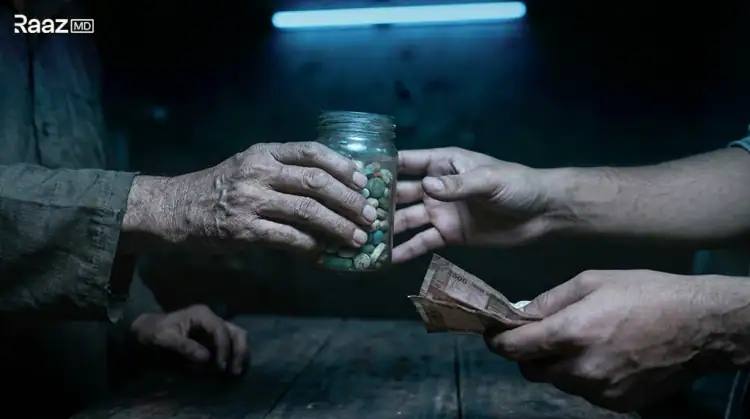
Unqualified practitioners understand this shame well. Many do not keep a fixed shop and visit a town only once or twice a week. Because they are outsiders, men feel safer telling them the truth. They then sell home-made mixtures that usually do nothing and can sometimes do real harm.
The cost is not only money. Men can spend years and large sums on roadside healers for a problem a qualified doctor can usually treat, while the strain on their confidence and relationships keeps growing. If ED or premature ejaculation is affecting your mood badly, talk to a doctor, and if you ever feel low or hopeless, India's free Tele-MANAS mental health helpline is available on 14416.
Why "herbal" cures from unqualified sellers are risky
Most ayurvedic and "desi" ED formulas sold this way have not been shown to work in good-quality trials. Unregulated products can also contain heavy metals or hidden prescription drugs, which can be dangerous if you have heart disease or take BP medicines. Our op-ed also cited a 2022 NITI Aayog study that found an average blood lead level of 4.9 µg/dL in India and 10.4 µg/dL in Bihar, with unprescribed and quack-made medicines named among the sources of lead exposure. If a product promises a "guaranteed" or "permanent" cure, treat that as a warning sign.
Where this comes from
This section draws on an op-ed by Raaz co-founders Akash Kumar and Dr. Harshit Kukreja, published in News18 and, in Hindi, in Jansatta, for World Sexual Health Day.
When should you see a doctor about erectile dysfunction?
See a doctor if erection trouble happens most times you try, has lasted more than a few weeks, or comes with other changes in your health. ED is often the first sign of a treatable condition, so it is worth checking early.
Book a consultation if any of these apply:
- You have trouble getting or keeping an erection most of the time, for more than a few weeks.
- You no longer get morning erections, or they have become much weaker.
- You also notice low desire, tiredness, low mood or weight gain.
- You have diabetes, high blood pressure, high cholesterol or heart disease, or they run in your family.
- You smoke, chew tobacco or drink heavily and want help to stop.
- The problem started after a new medicine.
- It is affecting your relationship, your confidence or your sleep.
Get urgent medical help straight away if you have chest pain, breathlessness, or an erection that is painful and lasts more than four hours.
Remember that doctors talk about erections every working day. For them it is routine, not embarrassing, and a private phone consultation is a perfectly good place to start.
How can Indian men get discreet, doctor-led help for ED?
Start with a private consultation with a qualified doctor, by phone if a clinic visit feels hard. The doctor can find the likely cause, suggest lifestyle changes and prescribe medicine only where it is safe for you.

This is how Raaz works. Instead of handing every man the same tablet, our doctors first look for your root cause: sugar, BP, hormones, stress and sleep, habits like smoking, alcohol and gutkha, or diet. Your plan then treats that cause. It may include lifestyle changes, counselling for anxiety, tests where needed, and medicines such as sildenafil or tadalafil only on a doctor's prescription, after checking they are safe with your health and other medicines. Never take them with nitrate heart medicines (such as chest-pain sprays or tablets), because the combination can drop blood pressure dangerously. You can read more about what sildenafil does and who should avoid it.
- Private: consult from home by phone, with no clinic waiting room.
- Doctor-led: 50,000+ doctor consultations so far, and "97% users saw results".
- Discreet: treatment is delivered to your door in plain packaging.
As we often say, "1 in 4 men struggle with ED and PE". You do not have to be one who suffers in silence. Current plans are listed on the Raaz plans page.
The bottom line
There is no single number for ED in India, but the pattern is clear. It is uncommon in healthy young men, far more common after 40, and very common in men with diabetes, high BP or heavy alcohol and tobacco use. The biggest problem is not how many men have ED but how few get proper help. If you are one of them, the fix usually starts with finding your root cause.
Take the first step today: the free Men's Test takes about 2 minutes, is fully private, and shows what may be behind your problem before you speak to a doctor.
Frequently asked questions
Is it normal to have erectile dysfunction at 28?
Occasional trouble is common at any age and is usually not a sign of disease. In a rural North Indian community study, about 2% of men aged 18 to 30 reported ED. If it happens most of the time or lasts several weeks, see a doctor. In young men the usual causes are stress, performance anxiety, poor sleep, smoking, alcohol, or early diabetes or hormone problems, and all of these can be treated.
Is erectile dysfunction 100% curable?
No honest doctor promises a 100% cure, but most men get back reliable erections once the cause is found and treated. That can mean better sugar or BP control, cutting down smoking and alcohol, treating low testosterone, or counselling for anxiety. Prescription medicines such as sildenafil or tadalafil help many men, but only after a doctor checks that they are safe for you.
Which country has the highest rate of erectile dysfunction?
There is no reliable ranking. Countries use different questionnaires and age groups, so a major global review found ED rates anywhere from 3% to 76.5% (Kessler et al., BJU International, 2019). Online lists that put India at the top, or call it the "impotence capital of the world", are not based on any national Indian survey.
Is erectile dysfunction becoming more common in India?
Probably, although hard national data is missing. An ageing population and rising diabetes, obesity, stress and alcohol use all push ED up, and more young men are now coming forward for help. Part of the rise is good news: more men are finally talking to a doctor instead of suffering quietly or visiting quacks.
Does diabetes increase the risk of erectile dysfunction?
Yes, sharply. A 2025 meta-analysis of Indian studies found ED in about 60% of men with type 2 diabetes, and diabetic men have roughly three to four times the risk of men without diabetes. Better sugar and blood pressure control can improve erections, which is why a doctor treats the diabetes and the ED together.
Are ayurvedic or herbal remedies for ED safe?
Not reliably. Most ayurvedic and "desi" ED formulas have not been shown to work in good-quality studies. Unregulated products sold by roadside clinics or online can contain heavy metals or hidden prescription drugs that are unsafe with heart or BP medicines. Be very wary of anything promising a guaranteed or permanent cure, and check with a qualified doctor first.