Does Penis Size Really Matter? Average Penis Size in India, Explained by a Doctor
हिंदी में पढ़ें
The average erect penis in India is about 13 cm (5.1 inches), almost the same as the world average. A doctor explains where your size falls, what women really think and when the real issue is your erection.
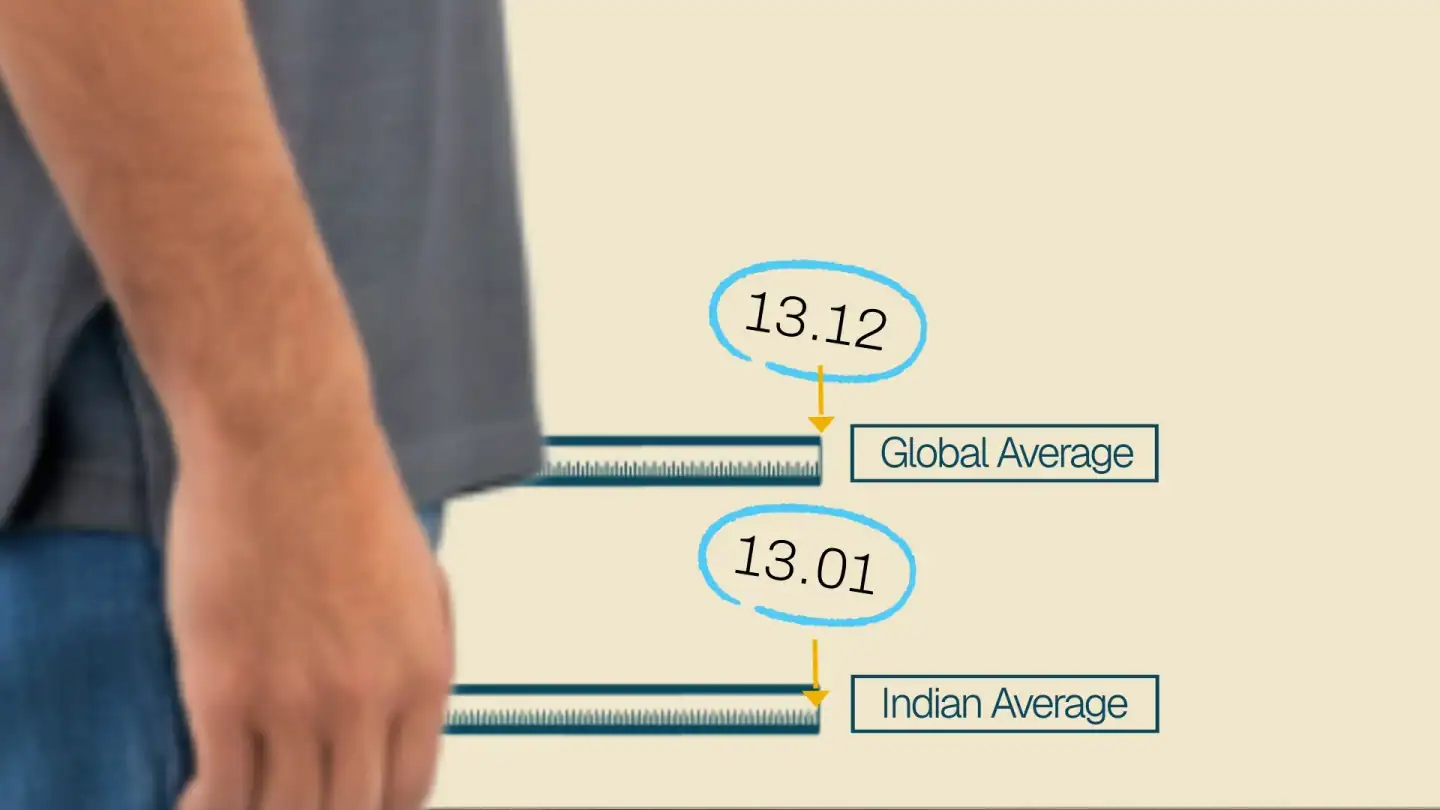
The average penis size in India is about 13 cm (5.1 inches) when erect, almost exactly the world average. So for most men, size matters far less than they fear: in large surveys, most women say they are happy with their partner's size. If you worry that you are too small, the measured numbers below should reassure you.
This guide covers the measured average in India, where 5, 5.5 and 6 inches fall, how to measure yourself properly, what women actually say, the myths Indian men grow up with, the truth about oils, ayurvedic medicines and surgery, and why the real issue is often erection quality rather than size.
What is the average penis size in India?
About 13 cm (5.1 inches) when erect. In a study of Indian men measured by doctors, the average erect length was 13.01 cm, almost the same as the 13.12 cm global average from a large review of measured men.
The Indian figure comes from a 2007 study in the International Journal of Impotence Research, carried out at a sexual health clinic in Kochi, Kerala. Doctors measured 301 physically healthy men. Erect size was measured in 93 of them, and the average erect length came to 13.01 cm, with an average erect girth (the distance around the shaft) of 11.46 cm.
For comparison, a 2015 review in BJU International pooled studies in which a health professional, not the man himself, did the measuring. Across its erect measurements (692 men), the average erect length was 13.12 cm (5.2 inches) and the average erect girth was 11.66 cm.
India vs the world: the measured numbers
| Measurement | Indian study (2007) | Global review (2015) |
|---|---|---|
| Soft (flaccid) length | 8.21 cm | 9.16 cm |
| Stretched soft length | 10.88 cm | 13.24 cm |
| Erect length | 13.01 cm (5.1 in) | 13.12 cm (5.2 in) |
| Soft girth | 9.14 cm | 9.31 cm |
| Erect girth | 11.46 cm (4.5 in) | 11.66 cm (4.6 in) |
The erect figures, which are the ones that matter during sex, differ by about one millimetre in length and two millimetres in girth. The Indian study's authors did note some differences from other countries' data, and a single clinic sample is not the whole of India. But the common belief that Indian men are much smaller than men elsewhere is not supported by measured data.
Where do 5, 5.5 and 6 inches fall?
This is the question most men really want answered. The table below uses the BJU International review's average and spread to estimate how each size compares with other men. It is an estimate from global measured data, not an Indian-only chart, but because the Indian erect average is almost identical, it is a fair guide.
| Erect length (inches) | Erect length (cm) | Roughly longer than |
|---|---|---|
| 4 inches | 10.2 cm | about 4 in 100 men |
| 4.5 inches | 11.4 cm | about 15 in 100 men |
| 5 inches | 12.7 cm | about 40 in 100 men |
| 5.5 inches | 14.0 cm | about 70 in 100 men |
| 6 inches | 15.2 cm | about 90 in 100 men |
| 6.5 inches | 16.5 cm | about 98 in 100 men |
Estimate based on the BJU International 2015 figures (average erect length 13.12 cm, standard deviation 1.66 cm).
On the same data, about 95 out of 100 men fall between roughly 10 cm and 16 cm (4 to 6.4 inches) when erect. So 5 inches is right in the middle, 5.5 inches is above average, and 6 inches is longer than most men. The "6 inches is normal" idea comes from porn and hearsay, not from measurement.
Why do online country and state-wise rankings show India so low?
You may have seen charts ranking countries, or even Indian states, by penis size, with India near the bottom. These lists are not reliable. Most mix self-reported numbers (men measuring themselves, often generously) with a few small clinical studies that measured in different ways, and then rank them as if they were comparable.
No measured, state-wise data for India exists. The one well-known Indian study came from a single clinic in Kerala. Any chart claiming that men in one state are bigger or smaller than men in another is guesswork, and it is not a fair guide to what is normal for you.
Is average size changing?
A 2023 Stanford-led review in the World Journal of Men's Health looked at 75 studies covering 55,761 men. After adjusting for region and age, it found that average erect length had increased by about 24% over 29 years. The reasons are not yet clear, and researchers have called for more study. What it does show is that "normal" is a range, not one fixed number.
If your size is in the normal range but sex still does not feel right, the more useful question is often about erection quality. We explain the common causes of erection problems in a separate guide.
How do you measure your penis correctly?
Measure only when fully erect: press a ruler into the fat at the base until it touches the pubic bone, and measure along the top to the tip. Most men who think they are small are measuring a partial erection or missing the length hidden in the fat pad.

- Wait for a full erection. A partial erection can be noticeably shorter. Measure when you are fully aroused and relaxed, not after a long, tiring day.
- Use a stiff ruler on the top side. Place it along the upper surface of the penis and press it gently into the fat pad until it touches the pubic bone. This is the standard method doctors use in studies.
- Measure to the tip. Read the length at the tip of the head, not including any extra foreskin. For girth, wrap a soft tape around the middle of the shaft.
Two common mistakes make men think they are smaller than they are. The first is looking down from above: the angle makes your own penis look shorter than it looks to anyone else. The second is measuring from the skin surface without pressing into the fat pad, which can hide a noticeable amount of length, especially if you carry belly fat.
Why does soft size change so much?
The soft penis changes size all the time. Cold weather, a cold shower, swimming, stress and nervousness all make it shrink, while warmth and relaxation make it hang longer. This is normal and says nothing about your erect size.
Soft length is also a poor guide to erect length. Some men look small when soft and gain a lot of length when erect, while others change less. This is one reason why comparing yourself with other men in a gym or hostel bathroom is misleading.
In clinics, doctors often measure stretched length instead: the soft penis is gently stretched to its full length and measured. In the Indian study, the average stretched length was 10.88 cm. So never compare a soft or stretched measurement with the erect average of 13 cm. They are different measurements.
Does size really matter to women?
Much less than men think. In a survey of over 52,000 adults, about 85 out of 100 women were satisfied with their partner's size, and most sensation comes from the outer part of the vagina and the clitoris, which penetration depth does not change.
That survey, by Lever, Frederick and Peplau in 2006, found a clear gap. About 45 out of 100 men wanted a bigger penis. Among women, about 85 out of 100 were satisfied with their partner's size and only about 15 wanted their partner to be bigger. Men, in other words, worry far more about their size than their partners do.
A 2015 study in PLOS One tested this another way. Researchers asked 75 women to choose from 33 handheld 3D models of an erect penis. For a long-term partner, women chose an average of about 16 cm in length and 12.2 cm in girth, only a little above the measured average. Women did not pick extreme sizes. It was a small American study, but it points the same way as the survey.
What female anatomy tells us
According to Cleveland Clinic, the vagina is usually about 7 to 10 cm deep when a woman is not aroused, and it lengthens and stretches when she is aroused. An average-sized penis is well matched to this.
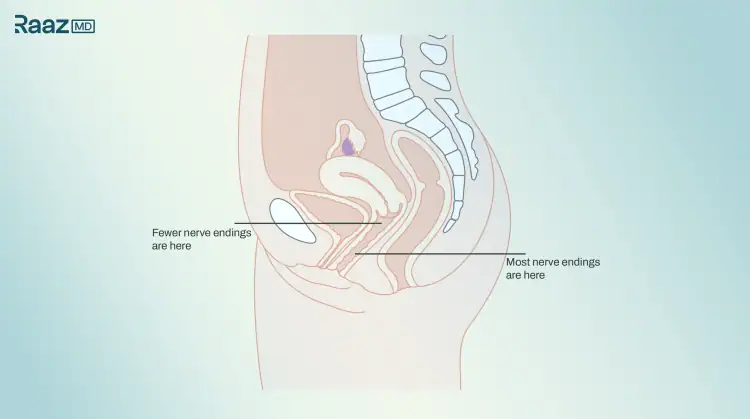
Most of the nerve endings sit near the opening and in the outer part of the vagina, with fewer deeper inside. So extra length reaches the part of the body that feels the least.
The clitoris, the main source of sexual pleasure for most women, sits outside the vagina, above the opening. Penis length does not change how it is stimulated. Touch, foreplay and the right rhythm do.
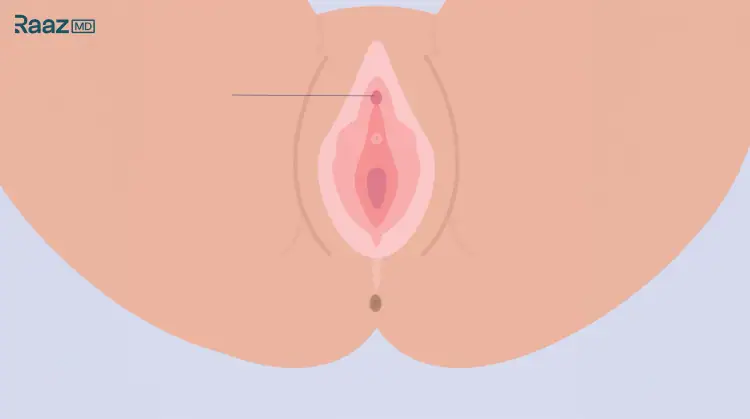
This is why many women say that foreplay, closeness, communication and how relaxed they feel matter far more to their satisfaction than their partner's size. A very long penis can even cause discomfort if it presses on the cervix.
Does girth matter more than length?
For some women, girth may matter a little more than length, because it affects the feeling of fullness near the opening, where the nerve endings are. But the evidence is thin, and neither measure on its own predicts whether a couple has a satisfying sex life.
Girth follows the same pattern as length. The average erect girth in the Indian study was 11.46 cm, and in the global review it was 11.66 cm: again, almost the same.
Why do so many Indian men worry they are too small?
Mostly porn, which picks unusually large actors and uses camera angles that exaggerate size, plus a common worry doctors call small penis anxiety, where men of normal size still feel inadequate. In India, missing sex education and a lot of myths make it worse.
Porn and small penis anxiety
Porn performers are chosen partly because they are well above average, and the camera is placed to make them look even bigger. After years of watching this, many young men start to believe that 6 or 7 inches is "normal" and that they are lacking. They are comparing themselves with the top few in 100, not with ordinary men.
Researchers at King's College London studied men who were anxious about their size. In a 2015 study in the journal Sexual Medicine, men with this worry reported lower satisfaction with sex than men without it, and many had tried stretching, pumps or other methods, with poor results. In its most severe form, where the worry takes over daily life, doctors call it body dysmorphic disorder. Online it is sometimes called small penis syndrome.
Why the worry is so common in India
- No real sex education. Most boys learn about sex from friends, jokes and the internet, so myths go unchallenged for years.
- Locker-room and hostel talk. Exaggerated stories from friends set an impossible standard.
- WhatsApp forwards and ads. Messages and social media ads push "size increase" oils and capsules, which only feed the fear.
- Wall ads for "sex clinics". Painted ads near railway stations and markets, and neem-hakeem clinics, promise to "cure" a size problem that most men do not have.
- Wedding-night pressure. In a society where marriage is a family matter, many men worry silently about performing on their first night, and size becomes the focus of that anxiety.
Common size myths in India, and the facts
| Myth | Fact |
|---|---|
| Indian men are much smaller than men in other countries. | The measured Indian erect average (13.01 cm) is almost the same as the global one (13.12 cm). |
| Masturbation or nightfall makes the penis small, thin or bent. | Neither changes size or shape. Both are normal, and nightfall is common in young men. |
| You can tell penis size from shoe size, hand size or the nose. | No. A UK study of 104 men found no link with shoe size, and no body part is a reliable predictor. |
| Dry fruits, desi ghee or "garam" foods make it grow. | No food changes adult size. A healthy diet does support blood flow and firmer erections. |
| A bigger penis means more stamina. | How long you last has nothing to do with size. It depends on arousal control, anxiety and health. |
| Size decides whether you can become a father. | It does not. Sperm health matters, not length (see the FAQ below). |
If worries about nightfall are part of the picture, our guide to nightfall and when it needs treatment explains what is normal. If your real concern is lasting longer, see our tips to increase sex stamina.
If any of this sounds familiar, you are not alone, and there is nothing shameful about it. This worry is common and it responds well to accurate information, and sometimes to a conversation with a doctor or counsellor. Size worry also often sits alongside other concerns, and we cover the common sexual health problems in men (sometimes called "gupt rog") in our overview guide.
Do oils, ayurvedic medicines, pills or surgery increase size?
No oil, cream, pill, food or ayurvedic medicine has been shown to permanently increase penis size. Pumps, extenders, filler injections and surgery offer at best small or temporary gains, backed by low-quality evidence, with real risks.
A 2021 systematic review in BJU International looked at a decade of research on enlargement methods. Some studies reported gains, but the authors concluded that the quality of the evidence was still too low to recommend any method on scientific grounds. Here is how the common options compare:
| Method | What it claims | What research shows | Main risk |
|---|---|---|---|
| Oils and creams (often searched as "ling vardhak tel") | Permanent growth | No evidence that anything rubbed on the skin changes size | Rashes, burns and allergic reactions on sensitive skin |
| Ayurvedic capsules and "sex power" medicines | Size and stamina increase | No good-quality trials showing any change in size | Lead, mercury or arsenic in some products; unknown ingredients |
| "Size" pills, supplements and special foods | Growth from within | No food or supplement changes adult penis size | Wasted money; hidden or unknown ingredients |
| Jelqing and stretching exercises | Longer and thicker penis | Men who tried them in studies reported poor results | Bruising, pain and small tears |
| Vacuum pump | Bigger penis | Draws in blood for a temporary effect only; it is a medical device for erection problems, not for size | Bruising and broken blood vessels if overused |
| Extender or traction device | Gradual lengthening | Small gains reported after months of wearing it for hours a day; studies are small and low quality | Discomfort, numbness and skin damage |
| Filler injections | More girth | Can add some girth, but results can be uneven and may not last | Lumps, infection and deformity, especially from unlicensed injections |
| Surgery (ligament release) | Longer penis | May make the soft penis hang lower, with little or no gain when erect; low-quality evidence | Infection, scarring, loss of sensation and a less stable erection |
The ayurvedic point needs extra care, because these products are sold as "natural" and therefore safe. A JAMA study bought US- and Indian-made ayurvedic medicines sold online and tested them: about 1 in 5 contained lead, mercury or arsenic, and every product with metals exceeded at least one safety limit for daily intake. These metals can harm the kidneys, liver and nerves.
This does not mean every ayurvedic product is harmful. It means that nothing sold for size has been shown to work, and some carry real risks. Never inject or insert anything sold for enlargement, and speak to a qualified doctor before taking any "sex power" medicine.
Could the real problem be your erection, not your size?
Often, yes. A weak or partial erection looks and feels smaller, and many men who worry about size actually have an erection problem with a treatable root cause.
When blood flow into the penis is reduced, the erection is softer and shorter than it could be. It may fade during sex or when you change position. Over time, men in this situation often decide they are "small", when the real change is in erection quality. Erection problems are common: 1 in 4 men struggle with ED and PE. Some people know erectile dysfunction as impotence, or by the Hindi word "namardi".
At Raaz MD, we look at why this happens rather than handing everyone the same pills. The same weak erection can come from very different root causes:
- Poor nutrition: low levels of nutrients such as vitamin D, B12 or zinc, and a diet heavy in fried food and sugar, affect blood vessels and energy.
- Hormones: low testosterone lowers desire and erection strength, and thyroid problems can affect both erections and ejaculation. Learn the signs of low testosterone.
- Stress and poor sleep: work pressure, anxiety (including size anxiety) and late nights raise stress hormones that work against arousal.
- Smoking: damages the lining of blood vessels, including those that supply the penis. Read more on how smoking affects erections.
- Alcohol: a drink may relax you, but regular heavy drinking weakens erections and lowers testosterone.
- Gutkha and chewing tobacco: nicotine narrows blood vessels and reduces blood flow, just as smoking does. We explain the link between gutkha, chewing tobacco and erection problems.
- Diabetes, high BP and high cholesterol: all three damage the small blood vessels and nerves needed for a firm erection, and erection problems can be an early warning sign of them.
Food matters too. A balanced Indian diet with dal, vegetables, fruit, nuts and less fried food supports blood flow, and we list the foods that support healthy erections in a separate guide.
Medicines such as sildenafil and tadalafil can help erections, but only on a doctor's prescription, after checking your heart health and other medicines. Never take them with nitrate heart medicines (such as chest-pain sprays or tablets), because the combination can drop blood pressure dangerously. They improve blood flow and erection firmness. They do not increase size, and they do not fix the underlying cause.
If you are not sure whether your erections are as firm as they should be, take the free Men's Test. It takes about 2 minutes, it is completely private, and it points to your likely root cause, built on the experience of 50,000+ doctor consultations.
What actually helps if you worry about your size?
Four things make a real difference: reaching a healthy weight, trimming pubic hair, dealing with the anxiety itself, and getting any erection problem checked.
- Reach a healthy weight. A fat pad above the pubic bone can bury part of the shaft, so the penis looks shorter than it is. Losing belly fat does not add length, but it can reveal length that was hidden. It also improves blood flow and testosterone.
- Trim your pubic hair. Dense hair at the base makes the penis look smaller. Trimming changes how it looks to you. If you have diabetes, use a trimmer rather than a razor, because small cuts heal slowly.
- Deal with the anxiety itself. Worry about size can weaken erections, which then makes the worry worse. Talking honestly with your partner often brings relief, and a doctor or counsellor can help if the worry is constant.
- Get your erections checked. If erections are softer than they used to be, that is worth looking into. Most causes are treatable, and our guide to the causes and treatment of erectile dysfunction explains the options.
It also helps to stop measuring and comparing. Checking again and again, or comparing yourself with porn, keeps the anxiety going. Focus instead on what makes sex good for both partners: time, foreplay, communication and comfort.
When should you see a doctor?
See a doctor if you cannot get or keep an erection firm enough for sex, if worry about size is making you avoid intimacy or affecting your mood, or if you were told as a child that your penis was unusually small.
Book a consultation if any of these apply to you:
- Your erections are softer, shorter or fade faster than they used to.
- You avoid relationships, sex or marriage because of worry about your size.
- You check or measure your penis again and again, or the worry affects your mood, sleep or work.
- You notice pain, a new bend or curve, or a hard lump in the shaft. This can be Peyronie's disease, which needs a doctor's assessment.
- You have been told your penis is very small for your age, or you had problems with puberty.
- You have used a pump, injection, oil or device and now have pain, swelling, a rash or numbness.
The right doctor is a urologist, an andrologist or a sexual medicine specialist. If the worry itself is the main problem, a psychologist or counsellor can help a great deal. These concerns are common and most are very treatable, and a good doctor has heard them many times before. If you would like to start from home, the free Men's Test takes about 2 minutes and is completely private.
Sources
- Promodu K et al. Penile length and circumference: an Indian study. International Journal of Impotence Research, 2007.
- Veale D et al. Am I normal? Nomograms for flaccid and erect penis length and circumference in up to 15,521 men. BJU International, 2015.
- Belladelli F et al. Worldwide temporal trends in penile length. World Journal of Men's Health, 2023.
- Lever J, Frederick DA, Peplau LA. Does size matter? Men's and women's views on penis size across the lifespan. Psychology of Men and Masculinity, 2006.
- Prause N et al. Women's preferences for penis size: a new research method using selection among 3D models. PLOS One, 2015.
- Veale D et al. Sexual functioning and behaviour of men with body dysmorphic disorder concerning penis size. Sexual Medicine, 2015.
- Shah J, Christopher N. Can shoe size predict penile length? BJU International, 2002.
- Romero-Otero J et al. Non-invasive and surgical penile enhancement interventions: a systematic review. BJU International, 2021.
- Saper RB et al. Lead, mercury, and arsenic in US- and Indian-manufactured Ayurvedic medicines sold via the Internet. JAMA, 2008.
- Cleveland Clinic. Vagina: anatomy and function.
The bottom line: if you are anywhere near 13 cm, you are normal, and even below that, size is rarely what decides a good sex life. If something still feels wrong, look at your erections, your health and your stress, not a ruler. The free Men's Test takes about 2 minutes, is private, and helps you understand your root cause.
Frequently asked questions
Is 5 inches a normal size?
Yes. Five inches (12.7 cm) erect is normal. A doctor-measured Indian study found an average erect length of 13.01 cm (5.1 inches), and a global review of measured men puts the average at 13.12 cm. On that global data, about 95 out of 100 men fall between roughly 10 and 16 cm (4 to 6.4 inches), so 5 inches sits close to the middle.
Is 6 inches big in India?
Yes. Six inches (15.2 cm) erect is above average. Based on a global review of doctor-measured men, it is longer than roughly 9 out of 10 men, and well above the 13 cm average found in an Indian study. The idea that 6 inches is the "normal" size mostly comes from porn and hearsay, not from measured data.
What size is considered too small?
Doctors use the term micropenis only when stretched length is far below the average for age, more than 2.5 standard deviations under the mean. It is rare, affecting well under 1 in 100 men, and is usually noticed in infancy or childhood. Exact adult cut-offs differ between reference charts, so a doctor diagnoses it by measuring. If your erect length is anywhere near 13 cm, you are well within normal.
Does penis size matter for pregnancy?
No. Pregnancy depends on healthy sperm reaching the egg, and semen is released near the cervix even with a shorter penis. What matters is sperm count and quality, the timing of sex and both partners' health. If you have been trying for 12 months without success (6 months if your partner is over 35), both of you should see a doctor.
Does penis size increase with age or weight loss?
The penis stops growing after puberty, usually by the late teens or early twenties, so it does not get bigger with age. It can look smaller later in life if belly fat builds up or erections become weaker. Losing weight does not add length, but it can reveal length hidden in the fat pad above the pubic bone, so it often looks bigger.
Is there a state-wise average penis size in India?
No reliable state-wise data exists. The main measured Indian study, published in 2007, came from a single clinic in Kochi, Kerala, and did not sample every state. Charts that rank Indian states, or place India low among countries, mostly mix self-reported numbers with poorly measured data, so they are not a fair guide to what is normal for you.