Yes, chewing tobacco and erectile dysfunction are closely linked. Nicotine from gutka, khaini or zarda tightens the blood vessels that fill the penis, and years of use damage them, so erections become weaker. You are not alone: nearly 3 in 10 Indian men use smokeless tobacco. The good news is that erections often improve after quitting.
It explains how chewing tobacco affects erections and sperm, what Indian research shows, how soon things can improve after you quit, and how to quit for good.
Tobacco is one of several root causes of sexual problems in men, and in many men it is not the only one. For the full picture of how ED is diagnosed and treated, read our guide to erectile dysfunction causes and treatment.
How does chewing tobacco cause erectile dysfunction?
An erection needs the arteries in the penis to relax and fill with blood. Nicotine from gutka, khaini or zarda tightens those arteries and disturbs the nerve signals that control them, and years of use damage the lining of the blood vessels, so less blood gets in and erections become weak or do not last.

Nicotine narrows blood vessels within minutes
When you are aroused, nerves in the penis release a chemical called nitric oxide. It relaxes the smooth muscle in the arteries, blood rushes into the spongy tissue, and the penis becomes firm.
Nicotine works against this. It switches on the body's "fight or flight" system, which tightens blood vessels and speeds up the heart. That is the opposite of the relaxed state an erection needs.
The clearest evidence comes from a controlled trial published in the Journal of Sexual Medicine. Researchers gave 28 healthy young men who did not use tobacco either a 6 mg nicotine gum (roughly the nicotine in one strong cigarette) or a dummy gum, then measured their erections while they watched an erotic film. With nicotine, the erectile response was 23% lower.
Two details matter for anyone who chews. First, the nicotine went in through the mouth, with no smoke at all, just like gutka or khaini. Second, the men did not feel any less aroused. Their minds were willing, but their bodies responded less. Many men who chew describe exactly this: desire is there, but the erection is not as firm as it used to be.
A pinch of khaini or a sachet of gutka keeps releasing nicotine for as long as it sits in your mouth, and many men chew several times a day. So the effect is not a one-off. It is repeated from morning to night.
Years of use damage blood vessels and the heart
Over time, tobacco does more than squeeze the arteries for a while. It damages the thin inner lining of blood vessels, which is where nitric oxide is made, and it speeds up the build-up of fatty plaque inside arteries.
A review of the research in Andrologia found that, across studies from China, the Middle East, Europe and the Americas, smokers had 1.4 to 3.1 times the odds of ED compared with non-smokers. The more and the longer men used tobacco, the higher their risk.
To be honest about the evidence: these long-term figures come from smokers. Far fewer studies have followed men who only chew. But the nicotine is the same, and smokeless tobacco also raises the risk of high blood pressure and heart problems, which are well-known causes of ED in their own right.
The arteries in the penis are much narrower than the arteries of the heart. Doctors believe this is why blood vessel damage often shows up in the bedroom first, sometimes years before any heart symptom. That makes ED worth taking seriously, not just as a sex problem but as a health signal.
Is chewing tobacco safer than smoking for your erections?
No. Chewing tobacco skips the smoke but not the nicotine, which your mouth absorbs directly, and that nicotine weakens erections on its own. There are fewer studies on chewers than on smokers, but none suggest chewing is the safer habit for sex, and it carries a much higher risk of mouth cancer.
Research on smokers does suggest that smoke adds its own harm. In one small study, smokers' night-time erections got firmer just 24 hours after stopping cigarettes, and kept improving while they used nicotine patches. So some of the damage from smoking comes from the chemicals in smoke, not only from nicotine.
But that does not make chewing safe. The nicotine gum trial above showed that nicotine alone, taken by mouth, cut the erectile response by almost a quarter. Gutka and khaini also contain other harmful chemicals, and gutka adds areca nut (supari), which is itself a known cause of mouth cancer.
Many men both chew and smoke, or switch from one to the other. If that is you, our guide on does smoking cause erectile dysfunction explains what quitting cigarettes and bidis can reverse. Switching from cigarettes to gutka is not a fix for your erections.
Gutka, khaini, zarda and pan masala: what is in them
India has many kinds of chewing tobacco, and the names can be confusing. Here is what the common products contain, with figures from the government's Global Adult Tobacco Survey (GATS-2), 2016-17.
| Product | What it is | Contains nicotine? | How common in India |
|---|---|---|---|
| Khaini | Tobacco rubbed with lime (chuna), kept inside the lip | Yes | The most used tobacco product in India: 11.2% of adults and 17.9% of men |
| Gutka | Tobacco, lime and areca nut, sold in small sachets | Yes | Third most used: 6.8% of adults |
| Paan with zarda (betel quid with tobacco) | Betel leaf with processed, often flavoured tobacco | Yes | 5.8% of adults |
| Mawa, gul, mishri, snuff | Chewing mixes (mawa) and tobacco powders rubbed on the gums or sniffed (gul, mishri, snuff) | Yes | Common in some states |
| Pan masala without tobacco | Areca nut, catechu and flavourings | No | Not counted as tobacco, but often mixed with a separate tobacco sachet |
Pan masala without tobacco has no nicotine, so there is no direct evidence that it causes ED. It is still not harmless, because areca nut damages the mouth. And the "two-sachet" habit of mixing it with tobacco puts you right back in the nicotine column.
Why this matters so much for Indian men
Smokeless tobacco is far more common in India than in most countries. GATS-2 found that 29.6% of Indian men use it, which is nearly 3 in 10. If you chew, you are part of a very large group, and many men in that group have quit successfully.
Many men start young, often with friends, at work or on long shifts and drives, and a packet is available at almost every paan shop. Most states banned ready-mixed gutka more than a decade ago, but it is still widely sold, often as two separate sachets of pan masala and tobacco that are mixed by hand.
Two common beliefs keep men chewing. The first is that chewing is the "safer" choice compared with cigarettes, which, as you have read above, is not true for your erections. The second is that weak erections are just age or "weakness" and something to hide. In reality, ED is a medical problem with clear causes, and tobacco is one of the easiest of them to act on.
Does gutka affect sperm count and fertility?
The evidence says yes. In a study of 638 Indian men at an infertility clinic, the more often men chewed tobacco each day, the lower their sperm count, sperm movement and normal sperm shape, and a Swedish study found 24% lower sperm counts in men who used oral tobacco.
What Indian research shows
The Indian study, published in Fertility and Sterility, looked at 638 men who were being checked for infertility at a private clinic. They were grouped by how often they chewed tobacco: fewer than 3 times a day (177 men), 3 to 6 times (264 men) and more than 6 times (197 men).
At every step up, sperm count, movement, shape and survival were significantly worse. The share of men with no sperm at all in their semen rose from 1% in the lightest group to 3% and then 14% in the heaviest group, although that particular trend was not statistically significant.
One point is important: this study compared light chewers with heavy chewers, not chewers with men who never used tobacco. What it shows clearly is a dose effect. The more you chew, the worse your sperm tend to be.
A smaller Indian study from 2024, of 98 men being evaluated for infertility, found the same pattern: heavier tobacco use went with lower sperm count and weaker sperm movement.
The strongest comparison with non-users comes from Sweden, where many men use a moist oral tobacco called snus. A study of 613 Swedish men from the general population found that oral tobacco users had a 24% lower total sperm count than non-users, even after allowing for cigarette smoking.
In India, this matters beyond the bedroom. Couples often face questions from parents and relatives soon after marriage, and it is usually the woman who gets tested first. In reality, a male factor is involved in a large share of couples who struggle to conceive, and a semen test is simple and painless.
Your body makes a fresh batch of sperm over roughly three months. So if you are planning a family, quitting now gives every new batch a better start. If you have been trying for a year without success, both partners should be checked by a doctor.
What about testosterone and sex drive?
Many men assume tobacco "drains" their testosterone. The research says otherwise. In the same Swedish study, oral tobacco users actually had 14% higher testosterone than non-users, even though their sperm counts were lower.
A large study of 6,754 men aged 50 to 75 found the same thing in smokers: they had slightly higher testosterone than non-smokers, yet more of them had ED (31.6% versus 26.0%) and low sex drive (25.6% versus 21.0%).
So tobacco-related erection problems are mainly about blood flow, not hormones. This is why the testosterone boosters sold online will not fix them. That said, some men do have low testosterone for other reasons, such as weight gain, diabetes or poor sleep. If you also feel tired all the time, have lost interest in sex or are losing muscle, read about the signs of low testosterone and ask a doctor for a simple blood test.
Could something else be behind your erection problem too?
Often, yes. Tobacco rarely acts alone. It raises the risk of high BP, high cholesterol and heart disease, and many men who chew gutka also drink, sleep badly or live with stress, each of which weakens erections on its own. Finding every cause is what makes treatment work.
At Raaz, this is the idea behind every treatment plan. Two men with the same weak erections can have very different reasons for them, so handing both the same pill does not make sense. Here are the causes a doctor usually looks at alongside tobacco:
| Root cause | How it affects erections | Link to tobacco |
|---|---|---|
| Diabetes | High blood sugar damages nerves and small blood vessels in the penis | Tobacco also damages blood vessel lining, so the harm adds up. Read more on diabetes and erectile dysfunction |
| High blood pressure | Stiff, narrow arteries carry less blood; some BP medicines also affect erections | Nicotine raises heart rate and blood pressure for a while after each use. See high BP and erections |
| High cholesterol | Fatty plaque narrows the arteries that feed the penis | Damaged artery lining makes it easier for plaque to form. See high cholesterol and ED |
| Thyroid problems | Both an overactive and an underactive thyroid can affect erections, desire and timing | A separate cause worth ruling out. See thyroid and erectile dysfunction |
| Low testosterone | Lower desire and weaker erections | Not usually caused by tobacco, but it can exist alongside it |
| Stress and performance anxiety | Stress hormones block arousal; one bad night can start a cycle of worry | Many men chew to cope with stress, and worry about erections keeps the cycle going |
| Alcohol | Dulls nerve signals; heavy drinking over years harms blood vessels and hormones | Chewing and drinking often go together |
| Poor sleep | Lowers energy, desire and testosterone | Nicotine is a stimulant, and late-night chewing can disturb sleep |
| Poor nutrition | A diet low in vegetables, fruit and protein harms blood vessels and energy | Nicotine dulls appetite, and mouth sores can make eating harder |
If you both chew and drink, the effects stack up. Our guide on alcohol and erectile dysfunction explains how much is too much.
Men often ask whether gutka raises BP, cholesterol or blood sugar. Nicotine clearly raises BP and heart rate for a short time after each dose. For cholesterol and blood sugar, the research on chewing tobacco is less clear. The practical answer is the same either way: if you chew, get your BP, sugar and cholesterol checked once a year.
Not sure if tobacco is the only reason? The free Men's Test takes about 2 minutes, is completely private, and helps a Raaz doctor spot your likely root causes so your treatment is built around them.
Can erectile dysfunction from chewing tobacco be reversed?
In many men, yes, especially if you quit before middle age and do not have diabetes or heart disease. Studies of men who stopped tobacco show erection scores improving within six months to a year, but very heavy, long-term use can leave damage that quitting alone does not fully undo.
This is the most hopeful part of the story. Blood vessels have a real ability to heal once the daily dose of nicotine stops, and the fight-or-flight squeeze on your arteries goes away within a day or two of your last chew.
A realistic timeline after you quit
No study has yet tracked the erections of men who quit gutka or khaini specifically. The timeline below comes from studies of men who quit smoking. Because nicotine is the shared factor, it is the best guide we have, but treat it as a rough picture rather than a promise.
| Time after quitting | What studies found | How strong the evidence is |
|---|---|---|
| 24 to 36 hours | Firmer night-time erections in 10 heavy smokers after one day without cigarettes (Guay, 1998) | Very small study, in smokers |
| 1 month | Erections kept improving in 4 men who stayed off cigarettes while using nicotine patches (Guay, 1998) | Tiny group, in smokers |
| 6 months | Erection scores improved in men aged 30 to 60, in every age group; only the very heaviest users did not improve significantly (Sahin, 2020) | Prospective clinic study, in smokers |
| 1 year | Better erectile function, with improvement mostly in men under 50 (Pourmand, 2004, reviewed by Kovac, 2015) | Follow-up study, in smokers |
| Many years of heavy use | Some blood vessel damage may be lasting, and ED risk can stay raised after quitting (Kovac, 2015) | Review of several studies |
Large population data point the same way. In the study of 6,754 men aged 50 to 75 mentioned above, former smokers had lower odds of ED than men who were still smoking.
What improves your chances? Quitting earlier rather than later, staying quit instead of stopping and starting, and dealing with the other causes in the table above. Regular exercise, a brisk 30-minute walk on most days, helps blood vessels recover too.
What you eat also plays a part. Our list of foods that help erections while you quit focuses on everyday Indian foods, not expensive supplements.
If your erections have not improved about three months after quitting, do not simply wait and worry. See a doctor. There may be another cause, and there are safe, proven treatments that can help while your body recovers.
How can you quit gutka and chewing tobacco for good?
Pick a quit date, clear gutka, khaini and pan masala out of your home, pocket and vehicle, replace the chewing habit with something safe, and get support. Nicotine replacement and counselling both improve your chances, and India's free National Tobacco Quitline (1800-11-2356) can help.
A step-by-step quit plan
- Choose a quit date within the next two weeks. Avoid a wedding or festival week, when offers and stress are everywhere.
- Clear it all out. Check your home, shirt and trouser pockets, bike or car, office drawer and bag. If it is not within reach, a craving is much easier to ride out.
- Know your triggers. For most men these are the first chai of the day, after meals, stressful calls, long drives and the paan shop on the way to work. Change your route and your routine for the first few weeks.
- Replace the mouth habit. Keep saunf, elaichi, a clove, sugar-free gum or cucumber and carrot sticks handy. Do not switch to "tobacco-free" supari mixes, which keep the habit alive and still harm your mouth.
- Tell one person at home or at work. Having someone who knows makes it easier to say no when a friend offers.
- Get free help. Call the National Tobacco Quitline on 1800-11-2356, run under the National Tobacco Control Programme of the Ministry of Health, or speak to a doctor about quit medicines.
- Plan for slips. One slip does not undo your progress. Work out what triggered it, and restart the same day.
Handling cravings and withdrawal
When you stop, your body notices the missing nicotine. Common withdrawal symptoms include strong cravings, irritability, restlessness, trouble sleeping, feeling hungrier and finding it hard to concentrate. They are usually worst in the first week or two and ease over the following weeks.
A single craving often peaks and fades within a few minutes. Delay, drink a glass of water, step outside for a short walk or take ten slow breaths. Physical activity is especially useful, because it helps with cravings, mood, sleep and erections at the same time.
Using nicotine gum or patches safely
Nicotine gum, lozenges and patches, available at Indian chemists, give your body a controlled amount of nicotine without the tobacco, areca nut and cancer-causing chemicals. They take the edge off withdrawal while you break the habit.
Use them with a doctor's guidance, for a set period, and then taper off. Nicotine on its own can still dampen erections for a while, so they are a bridge, not a permanent replacement. A doctor can also prescribe non-nicotine medicines that reduce cravings, if nicotine replacement is not right for you.
What about ED tablets, ayurveda or a hakim's cure?
Medicines such as sildenafil or tadalafil can help some men, but only on a doctor's prescription, and they do not undo tobacco damage. Shilajit, ashwagandha and other herbal mixes have no good evidence for tobacco-related ED, and unregulated "namardi" cures sold by unlicensed hakims can contain heavy metals.
Prescription medicines: what they can and cannot do
Sildenafil and tadalafil belong to a group of medicines that help the penis fill with blood when you are aroused. They do not create desire, and they do not repair damaged blood vessels. They are only safe on a doctor's prescription, because they can be dangerous with certain heart medicines called nitrates and are not suitable for every man.
They can work even while you are still using tobacco, but less reliably, because the cause keeps working against them. The best results come from combining treatment with quitting. To understand how these medicines work, read our guide on Viagra (sildenafil) tablet uses. Avoid "power" tablets sold at roadside stalls or through WhatsApp forwards, where you have no idea what is inside.
Ayurveda, shilajit and ashwagandha: what the evidence says
Many men try ayurvedic remedies first, and that is understandable. But the honest position is that no good-quality study has shown shilajit, ashwagandha or any herbal mix can reverse erection problems caused by tobacco.
Some small, short studies suggest ashwagandha or shilajit may slightly affect testosterone or sperm in certain men. None of them tested men whose ED came from tobacco, and as we saw above, tobacco ED is not a testosterone problem. Ashwagandha has also been linked to rare cases of liver injury. Tell your doctor about any supplement you take.
Why unlicensed hakim clinics are a risk
Across India, you will see posters, roadside tents and newspaper ads for "namardi" cures (a Hindi word for impotence) from unlicensed hakims and self-styled "sex specialists". They often promise permanent results in days, charge heavily and give unlabelled powders or pills.
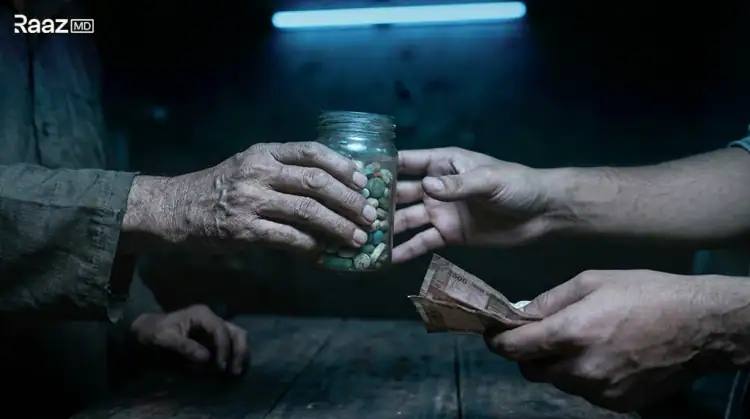
The risk is not just wasted money. A study published in JAMA tested 193 ayurvedic medicines, made in India and the US, bought online. About 1 in 5 (20.7%) contained lead, mercury or arsenic, and every one of those exceeded at least one standard for safe daily intake. These metals can harm your liver, kidneys and nerves. Unlabelled mixes from an unlicensed clinic carry at least as much risk.
If you have already taken such a product and feel unwell, stop it and see a qualified doctor. Otherwise, the safer path is simple: a registered doctor who checks the cause first.
When should you see a doctor?
See a doctor if erection trouble lasts more than a few weeks, has not improved about three months after quitting, or if you have been trying for a baby for a year without success. Go straight away if you also have chest pain, breathlessness, or a mouth sore or white or red patch that does not heal.
Book an appointment soon if any of these apply:
- Your erections have been weak or unreliable for more than a few weeks.
- You quit tobacco about three months ago and have not noticed any improvement.
- You are under 40 and ED has come on gradually, especially if you have chewed for years.
- You also have diabetes, high BP, high cholesterol or a family history of heart disease.
- You and your partner have been trying for a baby for a year without a pregnancy.
- Your sex drive has dropped and you feel tired or low most of the time.
Get help straight away if you have chest pain or breathlessness, or if you notice a mouth sore, ulcer, or white or red patch that has not healed in two to three weeks, or stiffness when opening your mouth. Tobacco users should also have their mouth checked by a doctor or dentist regularly.
Remember that ED can be an early warning sign of blood vessel problems elsewhere in the body. Researchers describe a history of tobacco use as a sign of "silent" vascular damage. Getting checked can protect your heart as well as your sex life.

If going to a clinic feels awkward, you can speak to a Raaz doctor online, privately, from home. A good doctor will ask about your tobacco use without judging you, look for other causes and help you plan how to quit.
The bottom line: chewing tobacco can weaken erections and lower sperm quality, but this is common, it is not a personal failing, and for many men it improves after quitting. Stopping gutka or khaini is the single most useful step you can take.
The second step is making sure tobacco is the only thing holding you back. Raaz doctors have carried out 50,000+ doctor consultations, and they look at the whole picture: habits, hormones, sugar, BP, stress and sleep. Take the free Men's Test. It takes about 2 minutes, it is private, and it gives a doctor what they need to build a plan around your root causes while you quit.
Frequently asked questions
Does gutka cause erectile dysfunction?
It can. Gutka, khaini and other chewing tobacco put nicotine straight into your blood through the mouth. In a controlled trial, one dose of nicotine gum reduced erections by 23% in healthy young men who did not use tobacco. Over the years, tobacco also damages blood vessels and raises heart disease risk, which weakens erections further. The more often and the longer you chew, the higher the risk.
Will quitting chewing tobacco improve erectile dysfunction?
For most men, yes. Studies of men who quit tobacco show erection scores improving, with clear gains six months to a year after stopping. Men under 50, lighter users and men without diabetes or high BP tend to recover best. If you used tobacco heavily for many years, some damage may be lasting, so see a doctor if things have not improved within a few months of quitting.
Does chewing tobacco affect sex drive?
It can, although most of the evidence comes from smokers. In a study of about 6,700 men aged 50 to 75, current smokers reported low sex drive more often than non-smokers (25.6% versus 21%). Their testosterone was not lower, so tobacco seems to affect desire through blood flow, stress and sleep rather than hormones. Low desire has many causes, so it is worth getting checked.
Can erectile dysfunction from tobacco be treated without quitting?
Partly, but not well. A doctor may prescribe medicines such as sildenafil or tadalafil, which can help some men even while they still use tobacco. They are only safe on a doctor's prescription, and they do not repair the blood vessel damage underneath. As long as you keep chewing, the cause keeps working against the treatment. Quitting alongside treatment gives the best and longest-lasting result.
Can nicotine gum or patches cause erectile dysfunction while I quit?
Nicotine on its own can weaken erections for a short time, so gum and patches are not completely free of this effect. They are still far safer than gutka or khaini, which add tobacco toxins, areca nut and a high risk of mouth cancer. In one small study, men who quit smoking had firmer night-time erections that kept improving while they used patches. Use them for a set period with a doctor's guidance, then taper off.
Can ayurveda or a hakim cure ED caused by gutka?
No herbal mix has been shown in good-quality studies to reverse tobacco damage. Be especially careful with unlicensed hakim clinics that advertise a "namardi" cure. A JAMA study found that about 1 in 5 ayurvedic medicines sold online contained lead, mercury or arsenic, which can harm your liver and kidneys. A qualified doctor can check whether tobacco is really the cause and guide you to proven treatment.