High blood pressure erectile dysfunction is very common. High BP is one of the leading physical causes of erectile dysfunction (impotence), because it slowly damages the arteries that fill the penis with blood, and some BP tablets can add to the problem. The good news: it is usually treatable, and the right plan helps both your erections and your heart.
If you have noticed weaker erections since your BP went up, or since you started a new tablet, you are not imagining it, and you are far from alone.
It explains how BP affects erections, which BP medicines are more or less likely to cause trouble, how to tell whether BP is really behind your problem, what treatment works, and when to see a doctor. BP is only one of the root causes of sexual problems in men, so we also show you how it fits with the others.
Does high blood pressure cause erectile dysfunction?
Yes. High blood pressure (hypertension) slowly damages the blood vessels that supply the penis, and an erection depends almost entirely on good blood flow. That makes BP one of the most common physical reasons men lose erection strength.
Erectile dysfunction (ED) means you regularly cannot get an erection, or cannot keep it firm enough for sex. One soft erection after a stressful day is normal. Doctors call it ED when it happens most of the time for several weeks. For a full overview beyond BP, read our guide to the causes and treatment of erectile dysfunction.
How common is ED in men with high BP?
Very common. Different studies measure it differently, but the pattern is consistent:
- A study in the Journal of the American Geriatrics Society found that about 49% of men aged 40 to 79 with high BP had ED.
- A study in the Journal of Urology found that 68% of men with high BP had some degree of ED, and 45% had severe ED.
- A large registry of high-risk hypertensive patients, summarised in a 2020 review in Vascular Health and Risk Management, found ED in 71%.
Overall, about 80% of ED has a physical cause, and blood vessel problems such as high BP, diabetes and high cholesterol lead that list. So if you have high BP and erection trouble, the two are very likely connected. That is not a reason to panic. It is a reason to get checked, because the cause can be worked on.
ED can be an early warning sign for your heart
Here is something most men are never told. The arteries that supply the penis are much smaller than the arteries of the heart. When high BP starts to damage blood vessels, the small penile arteries often show it first.
A review in the International Journal of Hypertension notes that ED symptoms often begin 2 to 3 years before heart disease shows up. An erection also needs the penile arteries to widen far more than arteries elsewhere, which is why they struggle first.
Seen this way, ED is useful information. It can be your body's early signal to check your BP, sugar and cholesterol, while there is still plenty of time to protect your heart. Men who act on it usually help both their erections and their long-term health.
How does high BP cause erection problems?
An erection needs a fast rush of blood into the penis. Years of high BP damage the inner lining of the arteries, make them stiff and narrow, and reduce nitric oxide, the natural chemical that lets these vessels open. Less blood gets in, and it drains out sooner.
Damaged, narrow arteries and less nitric oxide
When you are aroused, nerves send a signal to the penis. The lining of its blood vessels (called the endothelium) releases nitric oxide, which relaxes the muscle in the artery walls. The arteries widen, blood rushes into the spongy tissue, and the penis becomes firm.
Constant high pressure wears out that lining. Over time the arteries:
- Stiffen and narrow, so they cannot widen enough when needed.
- Collect fatty plaque (atherosclerosis), especially if you also have high cholesterol or diabetes, or you smoke.
- Make less nitric oxide, so the "open up" signal becomes weak.
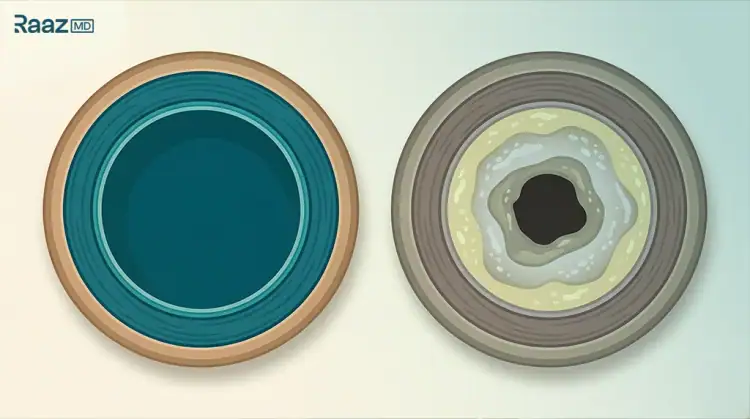
The result is an erection that takes longer, feels less firm, or fades before sex is over. Most men notice it gradually, over months, not overnight.
The testosterone link
High BP is also linked to lower testosterone, the hormone behind sex drive and part of erection strength. In the large HIM study of men aged 45 and older, published in the International Journal of Clinical Practice, men with hypertension had about 1.84 times the odds of low testosterone compared with men without it.
Researchers are still working out which comes first. But the practical point is simple: if you have high BP and also notice low desire, tiredness or low mood, a testosterone blood test is worth discussing with your doctor. Low testosterone can be checked and treated when it is confirmed.
Worry and performance anxiety
Once an erection fails once or twice, most men start worrying about the next time. That worry releases stress hormones, which tighten blood vessels and make the next erection harder still. A physical problem quickly picks up a mental layer.
This is why BP-related ED rarely feels purely "physical" to the man going through it. It also explains why treatment works best when a doctor looks at both sides, and why simply understanding the cause often takes a lot of pressure off.
Can your BP medicine cause erectile dysfunction?
Some can. Older beta-blockers (such as atenolol and metoprolol) and water pills (diuretics) are the BP tablets most linked to ED. ARBs such as telmisartan, ACE inhibitors, and most calcium channel blockers such as amlodipine rarely cause it, and ARBs may even help.
Harvard Health estimates that about 25% of all ED is caused by medicines, and BP tablets are among the most common culprits. But the answer depends on which tablet you take, not on BP tablets as a whole.
Common BP medicines in India and their effect on erections
The table below lists BP medicines commonly prescribed in India by generic name, grouped by type. Check the generic name printed on your strip, not the brand. It is based mainly on a 2014 review of heart medicines and sexual function in the Netherlands Heart Journal and on Harvard Health.
| Type of BP medicine | Common generic names in India | Effect on erections |
|---|---|---|
| ARBs (angiotensin receptor blockers) | Telmisartan, losartan, olmesartan | Rarely cause ED; several studies suggest they may improve sexual function |
| ACE inhibitors | Ramipril, enalapril | Usually neutral; rarely cause ED |
| Calcium channel blockers | Amlodipine, cilnidipine | Mostly neutral |
| Older beta-blockers | Atenolol, metoprolol, propranolol | Can cause or worsen ED |
| Newer beta-blocker | Nebivolol | Much lower risk; may help in some men |
| Thiazide and thiazide-like diuretics (water pills) | Hydrochlorothiazide, chlorthalidone | Among the most linked to ED |
| Loop diuretics (water pills) | Furosemide, torsemide | Can contribute to ED |
| Aldosterone blocker | Spironolactone | Can lower desire and cause ED and breast swelling in men |
| Alpha-blockers | Prazosin | Usually neutral |
| Central agents | Clonidine, methyldopa | Linked to sexual side effects in older studies |
Many Indian patients take combination tablets, such as telmisartan with amlodipine, or telmisartan with hydrochlorothiazide. In that case, look at each ingredient separately. A combination with a water pill carries more risk for erections than one without.
A note on nebivolol: a 2017 review in Therapeutic Advances in Urology found that, in small studies, men who switched from an older beta-blocker to nebivolol often saw their erections improve or at least not get worse. It seems to boost nitric oxide rather than block it. The studies were short, so this is a promising option to discuss, not a guarantee.
Can just knowing about the side effect make it worse?
Surprisingly, yes. In a study of men starting atenolol, reported by Harvard Health, almost one in three men who were told about possible sexual side effects reported ED. Among men who were not told the drug's name or its side effects, only 3% did.
This is called the nocebo effect: expecting a side effect can help create it. It does not mean your problem is imaginary. It means worry is a real, treatable part of the picture, and a calm conversation with your doctor can itself help.
What to do if you think your tablet is the problem
Never stop, skip or switch a BP tablet on your own. Stopping suddenly can push your BP up fast and raise the risk of a stroke or heart attack. Some tablets, especially beta-blockers, can also cause a rebound rise if stopped abruptly.
Instead:
- Note when the erection trouble started and whether it matched a new tablet or a change in your prescription.
- Check the generic names on your strip and compare them with the table above.
- Tell your doctor directly: "I think my BP tablet is affecting my erections." Doctors hear this every day.
- Ask whether another medicine could control your BP equally well with less effect on erections. There usually is one.
If your doctor switches your medicine, give it time. Harvard Health notes that erections can take several days to several weeks to return after a problem drug is stopped.
How do you know if BP is behind your erection problem?
BP is a likely factor if your readings are high or you take BP tablets, your erections weakened gradually, or the trouble began after a new medicine. But ED usually has more than one cause, so a doctor checks the whole picture before deciding.
This matters because the same symptom can have very different roots. What looks like a "BP problem" often turns out to be uncontrolled sugar, low testosterone, poor sleep or a heavy smoking habit sitting on top of the BP. Fix only one and the result is disappointing. Find all of them and treatment works much better. This root-cause approach is how Raaz doctors work.
Clues that point to blood flow or medicine
- Gradual change: erections have slowly become less firm over months or years, rather than failing suddenly.
- Fewer morning erections: when the cause is mainly stress or anxiety, morning and night-time erections usually continue. When blood flow is the issue, they tend to fade too.
- It happens in every situation: with a partner and alone, not just on stressful nights.
- Timing with a tablet: the problem started within weeks of a new BP medicine or a stronger prescription.
- Other vessel risks: you also have diabetes, high cholesterol or a big waistline, or you smoke or chew tobacco.
These clues often overlap. Diabetes, for example, damages both blood vessels and nerves, which is why it is worth understanding how diabetes affects erections if your sugar is also high. Many men with high BP also have raised cholesterol, and the two together speed up artery damage; our guide on high cholesterol and erectile dysfunction explains that link.
Tests a doctor may suggest
You do not need every test. A doctor picks based on your history, but these are the usual ones:
- Repeated BP readings, in the clinic and ideally at home, to see how well your BP is really controlled.
- Fasting blood sugar and HbA1c, to check for diabetes or prediabetes.
- Lipid profile, to check cholesterol and triglycerides.
- Testosterone, ideally a morning blood test, especially if desire is low.
- Thyroid (TSH), since both an underactive and an overactive thyroid can affect sexual function.
- Kidney function, which matters when choosing BP medicines.
- A heart check, such as an ECG, if you have chest symptoms or other risk factors, or have not had one recently.
BP is rarely the only cause. If you want to know what is behind yours, the free Men's Test takes about 2 minutes, is completely private, and helps a doctor see which root causes to look at first.
What is the treatment for high blood pressure erectile dysfunction?
High blood pressure erectile dysfunction treatment works on both problems at once: getting BP under control, adjusting the BP medicine if it is part of the cause, and, if needed, an ED medicine your doctor confirms is safe with your BP tablets. Lifestyle changes help both BP and erections.
Control your BP first
Well-controlled BP protects your arteries from further damage and gives erections the best chance to recover. That usually means taking your tablets every day, even when you feel fine, and checking your readings regularly.
WHO defines high BP as readings of 140/90 mmHg or higher on two different days. Your doctor may set a lower target for you, depending on your age, kidneys, heart and sugar levels. Ask what your personal target is and aim to reach it.
If your BP is controlled but your medicine seems to be the issue, your doctor may switch you to a drug with less effect on erections, such as an ARB or nebivolol, or remove a water pill from a combination. This is often the single most effective step for men whose ED began with a new tablet.
ED medicines and your BP tablets
The first-line medicines for ED are PDE5 inhibitors: sildenafil, tadalafil and vardenafil. They boost the effect of nitric oxide so blood can flow into the penis when you are aroused. They do not create desire and do not work without sexual stimulation. They are taken only on a doctor's prescription.
For most men on standard BP tablets, such as telmisartan, amlodipine, ramipril or a diuretic, these medicines are safe when a doctor has checked your full medicine list. The International Journal of Hypertension review notes they cause only small extra drops in BP with most BP medicines, without a significant rise in side effects.
Two important exceptions:
- Never take them with nitrates (such as nitroglycerin or isosorbide, often given as a tablet under the tongue or a spray for chest pain). The combination can drop BP to dangerous levels.
- Extra care with alpha-blockers (such as prazosin, or tamsulosin taken for prostate symptoms). Together they can cause dizziness or fainting, so your doctor will plan how and when you take them.
For the details, read how sildenafil works and who should avoid it. Please do not buy these tablets without a prescription or share them with friends. The choice of medicine depends on your heart and your other tablets.
Other medical options
- Testosterone treatment: considered only when low testosterone is confirmed by blood tests, along with symptoms. It needs careful follow-up, and it is not a general "strength" booster.
- Vacuum erection device: a cylinder and pump that draws blood into the penis, with a ring at the base to hold the erection. It is useful for men who cannot take tablets, including men on nitrates.
- Counselling or sex therapy: helpful when performance anxiety has built up, and often combined with medical treatment.
- Specialist options: for men who do not respond to tablets, a urologist can discuss injections and other treatments.
Lifestyle changes that help both
These changes lower BP and improve blood flow to the penis. They take a few weeks to show results, but they add up, and they make every other treatment work better.

- Cut down on salt. Most of it comes from achaar, papad, namkeen, packaged snacks and restaurant food, not the salt shaker. More on this in the India section below.
- Eat the DASH way, Indian style. Fill your plate with vegetables, dal, rajma and chana, seasonal fruit, whole grains like brown rice, millets and whole wheat roti, curd and nuts, with fewer fried and sugary foods. WebMD notes the DASH eating plan can lower BP in as little as 2 weeks.
- Move every day. Aim for about 30 minutes of brisk walking, cycling or any activity that makes you slightly breathless, most days of the week.
- Lose extra weight, especially around the belly. Even a few kilos off can lower BP and improve erections.
- Quit smoking, gutkha and khaini. Nicotine narrows blood vessels every time you use it and speeds up artery damage. Read more on how smoking affects erections.
- Limit alcohol. Heavy drinking raises BP and directly weakens erections. If you drink, keep it occasional and small.
- Manage stress. Long-term stress keeps BP high and feeds performance anxiety. Ten to fifteen minutes a day of slow breathing, meditation or gentle yoga, such as a seated spinal twist, can help.
- Sleep 7 to 8 hours. Poor sleep raises BP and lowers testosterone. If you snore loudly or wake up tired, ask your doctor about sleep apnoea, which is common in men with high BP and is treatable.

High BP and erectile dysfunction in India: what is different?
About 1 in 3 Indian adults has high blood pressure, many without knowing it, and the average Indian diet carries roughly twice the salt WHO recommends. That makes BP-related ED very common here, and often ignored until erections are affected.
The national ICMR-INDIAB study, which tested more than 1.1 lakh adults across India, found that 35.5% had hypertension, and rates were higher in cities. WHO estimates that worldwide, 44% of adults with high BP do not know they have it, because high BP usually has no symptoms.
That is why, for many Indian men, weaker erections are the first thing they notice. If that is you, treat it as a nudge to get your BP measured, not as something to hide.
The salt in everyday Indian food
A 2023 paper in the Journal of Clinical Hypertension puts average salt intake in India at nearly 11 grams a day, more than twice the WHO limit of 5 grams (about one level teaspoon in total, from all food).
Common sources that add up quickly:
- Achaar, papad and chutneys with added salt
- Namkeen, bhujia, chips and other packaged snacks
- Instant noodles, soups and ready masala mixes
- Restaurant, dhaba and takeaway food
- Extra salt or chaat masala sprinkled on fruit, salad and curd
- Processed cheese, sauces and bakery items
You do not need to eat bland food. Cook with less salt and use lemon, garlic, ginger, jeera, pepper and fresh herbs for flavour. Keep achaar and papad for occasional use, and check labels for sodium on packaged food. Your taste buds adjust within a few weeks.
Checking your BP at home
A home BP monitor is one of the most useful things a man with high BP can own. Clinic readings can be high from nervousness alone, and home readings show your real pattern.
- Choose a validated digital monitor with an upper-arm cuff that fits your arm. Wrist and finger monitors are less reliable.
- Sit quietly for 5 minutes, back supported, feet flat and arm resting at heart level.
- Avoid tea, coffee, smoking and exercise for 30 minutes before.
- Take two readings a minute apart, morning and evening, for a week before a doctor visit.
- Write them down or save them on your phone, and show your doctor.
Ayurvedic, homeopathic and "sex power" products: what the evidence says
Many men in India try ayurvedic, homeopathic or "sex power" products before they see a doctor, often because they feel embarrassed. That is understandable. But it helps to know what the evidence shows.
- No good-quality evidence shows that any ayurvedic or homeopathic product treats ED caused by high BP. Herbs like ashwagandha or shilajit have not been shown in good-quality studies to repair damaged blood vessels.
- Hidden ingredients are a real risk. Unregulated "herbal" sex pills have repeatedly been found to contain undeclared sildenafil or similar drugs. For a man on nitrates, that can be dangerous, and nobody has checked it against his BP tablets.
- Heavy metals such as lead and mercury have been found in some unregulated ayurvedic products, and these can harm the kidneys, which already work hard in people with high BP.
- The biggest danger is stopping BP tablets in favour of a "natural" cure. Uncontrolled BP damages the heart, brain and kidneys, and it makes ED worse, not better.
If you want to use a traditional remedy, tell your doctor what it is, so it can be checked against your BP medicine. If you want to know what doctor-led treatment with Raaz costs, the current prices are on the live plans page.
Common myths about BP and erections
| Myth | Fact |
|---|---|
| "My BP is under control now, so it cannot be behind my ED." | Years of past high BP, or the tablet itself, can still affect erections. Tell your doctor even if your readings look good. |
| "All BP tablets cause impotence, so it is better to stop them." | Many BP tablets rarely affect erections, and stopping them raises the risk of stroke and heart attack. Switching, with your doctor, is the safe route. |
| "Men with high BP can never take ED medicines." | Most men on standard BP tablets can, on a doctor's prescription. The main exception is nitrate medicines for chest pain. |
| "Herbal sex power capsules are safe because they are natural." | Some contain hidden sildenafil or heavy metals, and none have been checked against your BP tablets. |
| "ED at my age is just stress, nothing to do with my heart." | Stress plays a part, but ED can also be an early sign of artery strain, even in your 30s. A simple check-up settles it. |
Is BP-related erectile dysfunction reversible?
Often it improves a lot, especially when BP is brought under control early and the medicine suits you. After many years of uncontrolled BP some artery damage may remain, but treatment still helps most men get firmer, more reliable erections.
How much you recover depends on a few things:
- How long BP has been high and uncontrolled. Earlier action means more recovery.
- Whether a medicine was part of the cause. Men whose ED began with a tablet often improve noticeably after a doctor switches it.
- Other factors. Diabetes, smoking, low testosterone and poor sleep all need attention too.
- Your habits. Salt, weight, exercise and alcohol changes build benefits over months.
There are encouraging signs from research. ARBs have been linked to better sexual function in several studies, and switching from an older beta-blocker to nebivolol improved erection scores in small trials. Even when some damage stays, ED medicines prescribed by a doctor work well alongside BP treatment for most men. The key step is simply to start.
When should you see a doctor?
See a doctor if erection trouble lasts more than a few weeks or happens most times, if it started after a new BP tablet, or if your home readings stay high. Get urgent care for chest pain, breathlessness or a reading of 180/120 or higher.
Book an appointment soon if:
- You have had erection problems for more than 4 to 6 weeks.
- The problem began after starting or changing a BP medicine.
- Your home BP readings are often 140/90 or higher.
- You also have high sugar, high cholesterol, low desire or constant tiredness.
- You are under 40 and have ED, since this can be an early sign of blood vessel strain worth checking.
Get emergency help straight away if you have chest pain or pressure, breathlessness, a sudden severe headache, confusion, weakness on one side, blurred vision, or a BP reading of 180/120 or higher. Also go to an emergency department if an erection lasts more than 4 hours.
Doctors discuss erection problems every day, and it is one of the most treatable issues they see. If a clinic visit feels awkward, a private online consultation is a good place to start.
The bottom line: high blood pressure is one of the most common reasons men lose erection strength, and some BP tablets can add to it. But this is a problem with clear causes and real solutions. Controlling your BP, choosing the right medicine with your doctor, cutting salt, moving more and dealing with smoking, alcohol and stress help both your erections and your heart.
Most men whose BP-related ED is properly treated see real improvement. The hardest part is usually taking the first step. Raaz MD doctors have carried out 50,000+ consultations, and "97% users saw results". And since "1 in 4 men struggle with ED and PE", you are far from alone.
Not sure what is behind your erection problem? Take the free Men's Test. It takes about 2 minutes and is completely private. A doctor then reviews your answers, looks at the root causes (BP, sugar, hormones, stress or habits) and personalises a plan for you, and a health coach tracks your progress along the way.
Frequently asked questions
Which blood pressure medicine is least likely to cause erectile dysfunction?
ARBs (such as telmisartan and losartan) and ACE inhibitors (such as ramipril) rarely cause erectile dysfunction, and some ARBs may even improve it. Most calcium channel blockers, like amlodipine, are neutral. Older beta-blockers and water pills are the ones most often linked to ED. The right choice depends on your heart, kidneys and other conditions, so decide this with your doctor, not by switching on your own.
Can I take sildenafil or tadalafil with BP tablets like amlodipine or telmisartan?
For most men, yes, when a doctor prescribes it after checking your full medicine list. These ED medicines lower BP slightly, so your doctor will take extra care if you also take alpha-blockers such as prazosin. They must never be taken with nitrate medicines (nitroglycerin or isosorbide, often given for chest pain), because blood pressure can fall dangerously low.
Can low blood pressure cause erectile dysfunction?
Low blood pressure by itself is not a common direct cause of ED. But low readings can be a sign of something else, such as BP tablets that are too strong, dehydration, a heart problem or certain other medicines, and any of these can affect erections. If you feel dizzy or faint and also have erection trouble, get your medicines and heart checked by a doctor.
Can high BP cause erectile dysfunction at 30?
Yes. High blood pressure is increasingly common in Indian men in their 20s and 30s, and it can affect erections at any age. In a younger man, ED can be an early sign that the blood vessels are under strain, so it is worth a full check. Stress, weight, smoking, alcohol and poor sleep often add to it, and most of these can be fixed.
Should I stop my BP medicine if I think it is causing ED?
No. Stopping BP tablets suddenly can push your blood pressure up and raise the risk of a stroke or heart attack. Instead, tell your doctor exactly when the erection trouble started. Very often there is another BP medicine that controls your blood pressure just as well with less effect on erections, and your doctor can switch you safely.
Does lowering blood pressure improve erectile dysfunction?
It often helps, especially when BP is brought under control early with the right medicine, a lower-salt diet, regular exercise and weight loss. Improvement usually builds over weeks to months rather than overnight. If erections do not recover fully, ED medicines prescribed by a doctor can be used alongside BP treatment in most men.